Fogg Wins the Wager Through the Date Change
Around the World in Eighty DaysThe wager’s apparent loss and sudden reversal turn Phileas Fogg’s global journey into a contest not only against distance but against the calendar used to measure it. After reaching London five minutes late by his reckoning, Fogg seemed defeated; a final correction by Passepartout revealed that traveling east had given the party an extra day, and Fogg arrived at the Reform Club just in time to claim victory.
The Wager and Its Assumptions
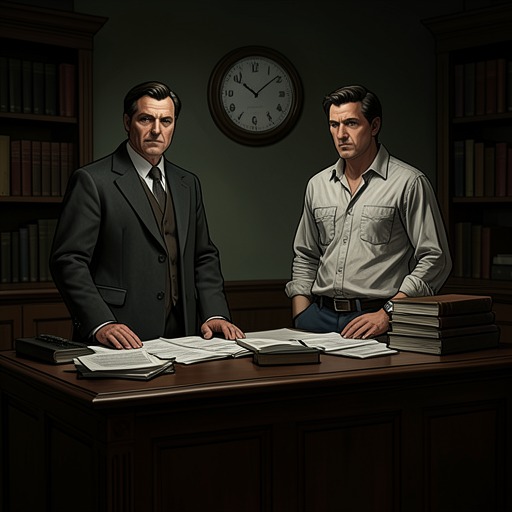
At the Reform Club, Fogg treated eighty days as a sufficient minimum for traveling around the world. When his companions raised the possibility of bad weather, contrary winds, shipwrecks, railway accidents, and other disruptions, he insisted that the unforeseen did not exist. He backed that certainty with £20,000 deposited at Barings Bank, accepting the risk that a single accidental delay could cost him the entire sum. The wager therefore rested on two linked propositions: that the route could be completed within the estimated time, and that its timetable could be followed with mathematical precision.
The doubts voiced by Fogg’s companions were not abstract. One objection was that railway lines might be torn up or trains stopped, and Fogg acknowledged that the connections would require almost mathematical leaps from trains to steamers and back again. He accepted that condition without qualification. His certainty made the wager possible, but the events of the journey repeatedly exposed how much depended on schedules, circumstances, and a correct understanding of time.
That confidence echoed his ordinary habits. On 2 October, the day the journey began, Fogg dismissed James Forster because the shaving water had been brought at 84 degrees Fahrenheit instead of 86. He sat watching a clock that recorded seconds as well as larger units of time, and expected to leave Saville Row for the Reform Club at exactly half-past eleven. Such details establish the standard against which the ending turns: a man who had enforced punctuality down to two degrees of water temperature would nearly lose everything through a mistaken count of days.
The Apparent Defeat
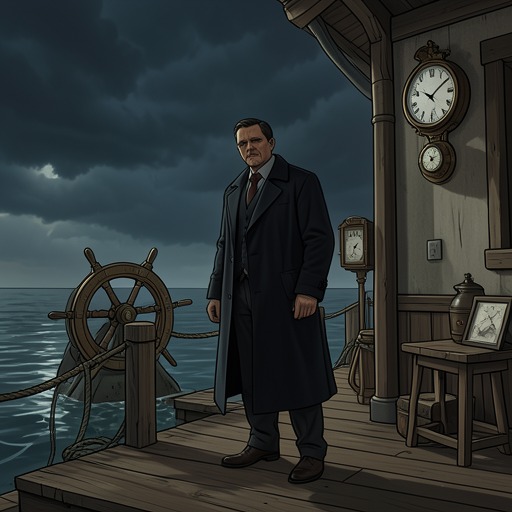
On the final approach from New York to Liverpool, Fogg’s prospects remained conditional. The Henrietta might cross the three thousand miles between 12 and 21 December if the sea did not grow too rough, the wind did not turn east, and neither the vessel nor its machinery suffered an accident. Once in London, the consequences of Fogg’s takeover of the ship could also create further difficulties. The journey’s last leg was thus not a smooth confirmation of his calculations but a narrow passage through risks that could still undo them.
Even after reaching England, delay intervened. The railway arrangements kept the special train from leaving until three o’clock. Fogg then stimulated the engineer with the offer of a generous reward, but forced delays remained. The journey to London, which would have taken five and a half hours on a clear road, ended with all the city clocks striking ten minutes before nine. Fogg concluded that he had completed the tour five minutes behind schedule and lost the wager. The distinction was painfully small: the world had been crossed, yet the deadline appeared to have passed.
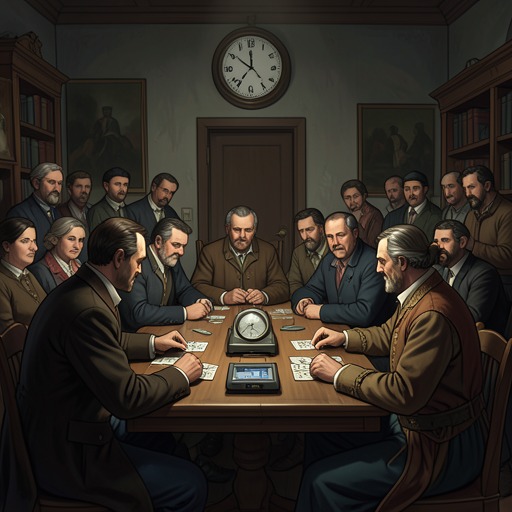
At the Reform Club, however, Fogg appeared before the final minute had run out. The pendulum had not completed its sixtieth beat when he entered, followed by the crowd that had forced its way through the doors. The club clock showed a quarter before nine. That entrance was the visible climax, but it did not yet explain how a traveler who believed himself late could be standing at the club before the deadline.
Passepartout’s Correction
The answer emerged at home, when Passepartout insisted that the day was Saturday and that Fogg had made a mistake of one day. The party had arrived twenty-four hours ahead of the time Fogg believed, leaving only ten minutes to reach the Reform Club. Passepartout seized his master by the collar and dragged him out. Fogg, without time to think, took a cab, promised the driver £100, and reached the club in a frantic rush that overturned five carriages and ran over two dogs.
The correction depended on the direction of travel. Fogg had journeyed constantly eastward and, without realizing it, gained a day; traveling westward would have produced the opposite result. As he moved east, the apparent days diminished by four minutes for each degree crossed. Across the earth’s 360 degrees, those minutes total twenty-four hours. Fogg had therefore seen the sun pass the meridian eighty times while his friends in London had seen it pass only seventy-nine times. They had been waiting on Saturday, while Fogg’s own count had led him to believe that the relevant day was still ahead.
The family watch carried by Passepartout sharpened the irony. It had always kept London time, but it would have exposed the discrepancy if it had also marked the days. It could preserve a reliable local hour while failing to register the calendar consequence of crossing the globe. The watch’s limitation makes the reversal more than a lucky last-minute reminder: the journey had supplied the missing day, but the instrument that accompanied Passepartout could not display it.
Victory and Its Cost
With the calendar corrected, Fogg had completed his journey in eighty days and won the £20,000 wager. Yet the prize did not make the expedition profitable. He had spent nearly £19,000 along the way, leaving only £1,000. He divided that remainder between Passepartout and Fix, against whom he held no grudge, though he deducted from Passepartout’s share the cost of the gas left burning in his room for 1,920 hours in the name of regularity.
The settlement preserves two contrasting measures of the journey’s outcome. Financially, victory brought little gain after the cost of reaching the deadline; for Fogg, however, being victorious mattered more than winning money. His final deduction also returns the narrative to the domestic discipline with which the journey began: even after the date itself has overturned his calculations, he still accounts for the gas consumed by an unattended lamp. That evening, now tranquil again, he asked Aouda whether their marriage was still agreeable to her. The wager ends not with wealth restored as an end in itself, but with Fogg’s return from apparent ruin and the personal future that victory makes possible.